AI Lead Generation Automation: How Businesses Get More Qualified Leads in 2026
AI Lead Generation Automation is transforming the way businesses find and convert potential customers. By using artificial intelligence for lead capture, qualification, follow-ups and customer engagement, organizations can generate more qualified leads while reducing operational costs. Discover how AI-powered lead generation systems help businesses scale faster and improve sales performance in 2026.
BUSINESS AUTOMATION
What is AI Lead Generation Automation?
AI lead generation automation refers to the integration of artificial intelligence technologies designed to streamline and optimize the process of identifying, gathering, and managing potential customers. In an era where data plays a pivotal role in business operations, AI enhances the lead generation process by leveraging advanced analytical capabilities, enabling organizations to obtain more qualified leads efficiently.
One significant aspect of AI lead generation automation is its ability to analyze vast amounts of data rapidly. Traditional lead generation methods often involve extensive manual input, which can be both time-consuming and prone to errors. By utilizing AI algorithms, businesses can process data from multiple sources, categorizing and segmenting leads based on predefined criteria. This analytical prowess allows for a deeper understanding of customer behaviors and preferences, equipping companies with actionable insights that guide marketing strategies.
Moreover, artificial intelligence plays a critical role in predicting customer behavior by recognizing patterns and trends in data. For instance, machine learning models can forecast the likelihood of a lead converting into a customer by examining past interactions and engagement levels. This predictive capability aids businesses in prioritizing leads, enabling sales teams to focus their efforts on prospects with the highest potential for conversion.
Another essential component of AI lead generation automation is its ability to automate repetitive tasks. Tasks such as data entry, email follow-ups, and lead scoring can be automated, allowing sales and marketing teams to dedicate their time to more strategic initiatives. By reducing the manual workload, organizations can enhance efficiency and productivity, contributing to a more robust pipeline of qualified leads while ensuring a streamlined workflow.
Challenges of Traditional Lead Generation
Traditional lead generation methods have long been the backbone of numerous businesses aiming to attract potential customers. However, in a rapidly changing marketplace, these conventional approaches are fraught with significant challenges that can hinder a company's growth and efficiency. One of the most pressing issues faced by businesses is the high cost associated with traditional lead generation techniques. From direct mail campaigns to telemarketing initiatives, these methods often require substantial investments without guaranteeing a positive return on investment.
Moreover, the processes involved in traditional lead generation are often inefficient. Businesses may rely on outdated systems that do not enable quick adjustments or real-time data analysis. As a result, valuable time is wasted on leads that may not be well-aligned with the company's offerings. This inefficiency not only hampers productivity but also leads to missed opportunities for forming connections with potentially lucrative customers.
Tracking leads effectively is another common dilemma. With traditional methods, businesses may struggle to monitor the journey of a lead from initial contact to conversion. The lack of advanced tracking systems makes it challenging to assess the effectiveness of different strategies. Consequently, businesses are often left questioning which tactics yield the best results, leading to uncertainty in future planning.
Finally, the qualification of leads poses a daunting challenge. Traditional methods frequently produce a large volume of leads, but many of these may not meet the criteria for being considered ‘qualified’. This results in wasted resources spent on nurturing unqualified leads, diverting attention from more promising opportunities. Ultimately, these challenges underscore the need for businesses to evolve and embrace more efficient, technology-driven solutions for lead generation.
How AI Automates Lead Generation
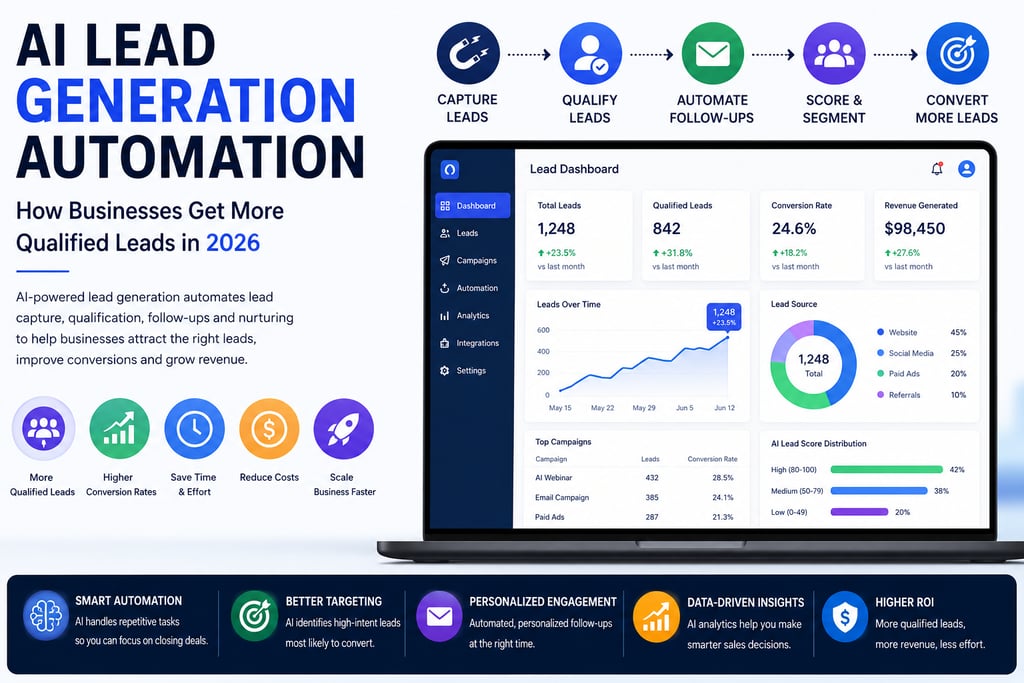
Artificial intelligence (AI) has transformed lead generation by automating various processes that are traditionally time-intensive. One of the most significant aspects is lead capture, where AI tools play a crucial role in collecting information from multiple channels such as websites, social media platforms, and email. With advanced algorithms, these tools can gather data effortlessly, ensuring a steady flow of potential leads without manual input.
Once leads are captured, AI further enhances the process through lead qualification. This involves applying specific criteria and methods to assess and prioritize leads based on their likelihood of conversion. Utilizing predictive analytics, AI can analyze past behaviors and characteristics, helping businesses focus their efforts on the most promising prospects. This ensures a more efficient allocation of resources and increases the chances of successful conversions.
Follow-up automation is another crucial function that AI provides. It enables businesses to send timely automatic responses and engage with leads based on their specific actions. For instance, if a lead downloads a whitepaper, AI can trigger an email follow-up, enhancing engagement without manual effort. This level of automation allows companies to maintain consistent communication, fostering relationships that lead to successful conversions.
AI’s capability for customer segmentation further refines lead generation efforts. Through data analysis, AI categorizes leads into distinct segments based on demographics, behavior, and interests. This targeted marketing approach allows businesses to craft personalized messages, increasing the likelihood of engagement and conversions.
Finally, lead scoring is a comprehensive method that AI employs to assess the potential value of each lead. By rating leads based on their readiness to purchase and overall engagement, AI helps businesses prioritize which leads to nurture further. This scoring system facilitates a strategic focus on leads that are more likely to convert, streamlining the journey from lead to customer.
Benefits of AI Lead Generation Automation
Implementing AI lead generation automation offers several advantages that significantly enhance a business's ability to acquire and manage leads effectively. One of the most notable benefits is the ability to generate more qualified leads. By utilizing algorithms that analyze large data sets, AI systems improve targeting, leading to higher quality contacts who are more likely to engage with the business's offerings.
Another critical benefit is the improvement in conversion rates. Automated nurturing processes facilitate a smoother customer journey, allowing prospects to receive personalized communication and relevant information at each stage of their decision-making process. This increased engagement aids in turning leads into satisfied customers.
A significant time-saving aspect of AI lead generation automation is the reduction of manual work for sales teams. By automating routine tasks such as data entry and follow-ups, sales professionals can concentrate their efforts on closing deals, thereby increasing efficiency and productivity. This transition allows teams to operate more strategically and effectively.
Furthermore, AI automation contributes to faster sales cycles. By streamlining lead management processes, businesses can swiftly move from identifying prospective clients to finalizing sales. This acceleration not only enhances customer experience but also ensures that companies can respond more dynamically to market demands.
Ultimately, these efficiencies result in higher revenue growth for organizations. The combination of increased lead quality, improved customer engagement, time saved on manual tasks, and expedited sales processes creates a robust foundation for sustained business expansion. As a result, businesses leveraging AI lead generation automation are well-positioned to achieve their growth objectives in an increasingly competitive landscape.
Real-World Business Examples of AI Lead Generation Automation
A multitude of businesses are now adopting AI lead generation automation to enhance their marketing efforts and acquisition strategies. This technology has proven effective across various sectors, showcasing its versatility and impact. One compelling example is HubSpot, which leveraged AI-driven tools to refine its lead scoring system. By implementing machine learning algorithms to analyze customer data, HubSpot increased the precision of its targeting, leading to a remarkable 30% rise in lead qualification rates over the span of six months. This instance underscores the potential for AI to not only streamline processes but also significantly improve outcomes.
Another notable case is that of LinkedIn, which has integrated AI into its sales solutions, allowing businesses to automate lead generation on its platform. By utilizing AI algorithms, LinkedIn helps users identify high-quality leads based on historical interactions and behavioral patterns. As a result, companies utilizing this technology have experienced a 25% improvement in conversion rates. This example highlights the enormous value of data-driven insights in enhancing lead generation efforts.
Furthermore, a study conducted by Salesforce demonstrated that businesses employing AI for lead generation saw an average sales growth of 11% over a year. Companies that automated their lead nurturing processes reported saving 20 hours a week, enabling their teams to focus more on strategic tasks rather than administrative ones. These statistics reinforce the growing consensus that AI lead generation automation can substantially augment traditional marketing approaches.
In conclusion, the successful implementation of AI lead generation automation is indeed a game changer for businesses. By examining these real-world examples, other companies can glean valuable insights into effective strategies that lead to enhanced efficiency and increased sales outcomes, paving the way for future enhancements in marketing technology.
Comparison Table: Traditional Lead Generation vs. AI Lead Generation Automation
As businesses strive to enhance their lead generation processes, understanding the differences between traditional methods and AI-driven approaches is essential. Below is a comprehensive comparison table that showcases key differences across various factors such as cost, efficiency, lead quality, conversion rates, and manual workload.
Factor Traditional Lead Generation AI Lead Generation Automation Cost Higher operational costs due to extensive manual labor and offline activities. Reduced costs, leveraging technology to automate tasks and minimize human involvement. Efficiency Time-consuming processes, often involving cold calls and manual outreach. Enhanced efficiency through automated processes that quickly identify and engage potential leads. Lead Quality Variable quality of leads, reliant on human judgment and market understanding. Higher quality leads sourced using data analytics and predictive algorithms. Conversion Rates Lower conversion rates often due to misaligned targeting and inefficient follow-up. Improved conversion rates thanks to precise targeting and timely, personalized follow-up strategies. Manual Workload Significant manual workload with repetitive tasks requiring substantial human resources. Minimal manual workload as automation takes care of most repetitive tasks.
This comparison illustrates several advantages of AI lead generation automation over traditional methods. Businesses adopting AI technology in their lead generation strategies can expect to see substantial improvements in efficiency, lead quality, and ultimately, conversion rates. As these technologies continue to evolve, the landscape of lead generation will likely shift, leading to more innovative approaches in capturing qualified leads.
Future Trends in AI-Powered Sales and Lead Generation
As businesses look toward the future, it becomes increasingly clear that artificial intelligence (AI) is set to play a pivotal role in lead generation and sales strategies. By 2026, several trends are poised to redefine how organizations identify and nurture qualified leads. One significant advancement is the rise of predictive analytics, which enables businesses to anticipate customer behavior and proactively tailor their offerings. This technology harnesses vast amounts of data, applying algorithms to forecast which leads are most likely to convert, thus optimizing efforts and resources.
Enhanced personalization will also emerge as a crucial trend, driven by AI's capability to analyze consumer preferences and behaviors. By leveraging machine learning, businesses will create more tailored messages and experiences for leads, improving engagement and conversion rates. Forward-thinking companies will utilize AI to segment their audiences more effectively, ensuring that prospects receive relevant content at the right moment throughout the sales funnel.
Furthermore, the integration of AI with Customer Relationship Management (CRM) systems is expected to become more sophisticated. Companies will increasingly rely on AI-powered CRM tools to automate lead scoring, track interactions, and manage customer data. Such integration will streamline operations and allow sales teams to focus on high-impact activities, thereby enhancing productivity.
Alongside these advancements, the ethical implications of AI will prompt businesses to adopt transparent practices. By 2026, consumers will favor companies that prioritize data privacy and ethical AI usage, leading to a competitive advantage for those who align with these values.
Overall, as we approach 2026, the convergence of predictive analytics, personalized experiences, and refined AI-CRM integrations will significantly shape sales strategies, enabling businesses to generate and convert more qualified leads effectively.
FAQs about AI Lead Generation Automation
As businesses continue to embrace AI lead generation automation, several common questions arise regarding its implementation and effectiveness. Understanding these queries can greatly assist organizations in making informed decisions about adopting these technologies.
What does AI lead generation automation entail?
AI lead generation automation refers to the use of artificial intelligence tools to streamline and optimize the process of identifying and engaging with potential customers. This technology utilizes data analysis and machine learning algorithms to target leads with high conversion potential efficiently.
How can a business implement AI lead generation?
Implementation typically starts with selecting the right software that aligns with the company’s needs. Businesses should assess their existing systems for compatibility, ensure employee training programs are in place, and establish clear objectives for their lead generation efforts.
What are the costs associated with AI lead generation automation?
The costs can vary significantly based on the chosen solutions, ranging from subscription fees for software services to potential costs for integrations and training. It is advisable for companies to conduct a cost-benefit analysis that considers not only direct expenditures but also potential savings in labor and increased efficiency.
What are some best practices for using AI in lead generation?
Companies should focus on data quality to enhance the performance of AI tools. Regularly updating contents, segmenting leads effectively, and nurturing leads through personalized communication are critical best practices that can optimize results from AI lead generation automation.
How does AI lead generation integrate with existing systems?
Modern AI tools are designed with integration capabilities that allow them to work alongside existing CRM systems and marketing platforms. Ensuring compatibility and a seamless flow of data is essential for maximizing the benefits of automation.
What potential ROI can businesses expect?
The return on investment for AI lead generation can be substantial. Organizations often report enhanced lead quality, higher conversion rates, and reduced time spent on manual tasks, ultimately contributing to increased revenue and growth.
Introducing Neuva AI: Your Partner in AI Business Automation Solutions
In an ever-evolving marketplace, businesses are increasingly turning to automation solutions to enhance productivity and efficiency. Neuva AI stands out as a leading provider of AI business automation solutions, combining advanced technology with industry expertise to cater to a wide range of business needs. Specializing in the automation of various processes, Neuva AI provides a suite of tools designed to optimize efficiency and improve outcomes.
What sets Neuva AI apart is their commitment to delivering tailored solutions for lead generation automation. Their cutting-edge technology leverages artificial intelligence and machine learning algorithms to streamline the process of identifying and nurturing qualified leads. This not only reduces the time spent on manual tasks, but also significantly enhances the quality of leads generated. By utilizing Neuva AI's tools, businesses can expect to increase their conversion rates while focusing more on core activities that drive growth.
Among the comprehensive services offered by Neuva AI, businesses can access tools for data analysis, lead scoring, and customer engagement automation. These tools provide insightful analytics, helping organizations understand their target audience better and adapt their strategies accordingly. Additionally, the platform facilitates seamless integration with existing systems, ensuring a smooth transition to automated lead generation processes without disrupting day-to-day operations.
By choosing Neuva AI as a partner in automation, businesses are equipped with not just the technology, but also the strategic guidance needed to navigate the complexities of lead generation. This collaborative approach enables organizations to harness the full potential of AI, transforming their lead generation efforts into a well-oiled machine that consistently delivers high-quality leads. With Neuva AI, companies can confidently pursue their goals, enhanced by the power of intelligent automation.
Empower Your Business with AI Lead Generation Automation
As we navigate through 2026, the significance of AI lead generation automation has become increasingly apparent for businesses aiming to enhance their sales strategies. The landscape of lead acquisition is evolving at a rapid pace, and companies cannot afford to fall behind. Embracing cutting-edge automation solutions allows businesses to not only identify but also nurture qualified leads more effectively. By integrating AI into your operations, you can streamline workflows, increase efficiency, and ultimately, drive revenue growth.
Investing in AI lead generation tools facilitates data-driven decision-making, enabling businesses to analyze patterns, gain insights, and optimize their marketing strategies. It is a pivotal step toward understanding customer behavior, identifying prospective clients, and establishing a strong market presence. These advanced technologies can help transform the way you engage with your audience, leading to improved conversion rates and heightened customer satisfaction.
For those leaders ready to explore how AI systems can revolutionize lead generation, numerous reputable providers are available to assist in this transition. Firms such as Neuva AI offer tailored solutions designed to meet diverse organizational needs. Their expertise encompasses developing personalized campaigns, automating follow-ups, and providing actionable analytics to ensure you are always a step ahead of your competition.
To prepare your business for the future, it is advisable to proactively seek out information that pertains to AI lead generation automation. Whether through a consultation with industry experts or engaging with technology platforms, the key is to act. Begin by assessing your current lead generation process and identifying areas for improvement.
Now is the ideal time to take advantage of these innovative solutions. Equip your business with the necessary tools and knowledge to enhance your lead generation processes. Reach out to Neuva AI or another qualified provider to discover how AI can transform your approach to attracting and converting leads.
More Links
Contact
Reach out to neuva ai for tailored AI solutions.
Phone
Connect@neuvaai.com
+91 9759115656
© 2026. All rights reserved @NeuvaAi.
Neuva AI provides AI-powered tools for education, business productivity and workplace automation.